All posts by Bryce

The Lobbyists’ Lament

Today’s blog post was written by Haley Barbour and Ed Rodgers and first appeared in Politico.

Well, well, well. A new Gallup poll reveals that Americans view lobbyists as having the lowest honesty and ethical standards of any profession of the 22 surveyed. We’re shocked!

You don’t have to be an expert at studying the internals and crosstabs of a poll to understand that lobbyists’ work contains all the right ingredients for a cocktail of contempt. Lobbyists deal with the government in Washington. Ding! Politics. Ding ding! Political fundraising. Ding ding ding! We do much of our work with a lawyerly patina. Ding ding ding ding!

Lobbying is an unloved industry, with scads of lawyers, politicians and bureaucrats as well as campaign money in the mix, and everybody wants something. Everyone likes to beat up on us, and none more so than President Barack Obama, who grandiosely says things like: “We’re going to have to change the culture in Washington so that lobbyists and special interests aren’t driving the process.”

That kind of bluster doesn’t bother us. We love our jobs, but we’re not expecting the thanks of a grateful nation—lobbying just doesn’t have too many appealing elements for most Americans, and that won’t change. But if you are an Obama disciple and it makes you feel more comfortable, you could always just think of us as “Navigators.”

Each of us has had a 20-plus year career as a lobbyist, so it’s safe to say we’ve given some thought to lobbying and what lobbyists really do. And didn’t former President Bill Clinton once say something like: If you know what you’re doing, you’re never afraid to talk about what you do? So we come not to bury lobbyists, but to explain them. We don’t mind talking about what we do. And thanks to the ever-expanding government and the perpetual nature of bureaucracy, the lawyer and lobbyist business is a growth industry.

So many lobbyists are lawyers because a lot of what lobbyists do is like a slow-motion jury trial. You have to find the jury, meet with them one at a time and argue your case; you advocate on behalf of your client. It’s about persuasion.

Lobbying mostly consists of three parts:
First, someone has a problem, concern or desire to change something in Washington or in government somewhere. A good lobbyist needs to put together a “wiring diagram” that identifies all the offices and individuals who have some sort of discretionary input over the issue in question. That group includes the obvious government offices, but can also include the media, competitors, trade associations, think tanks and other interest groups.

These days, that diagram can grow pretty large. Aside from President Obama’s unprecedented and questionable use of executive fiat, power is becoming more diffuse in Washington. The growth of bureaucracy is making it harder for a company or even an industry, much less an individual, to find out what is actually going on in government, and harder still to move the needle on any given measure. Knowing who to talk to is the first step and, increasingly, it takes an expert to draw up the plan.

Second, you have to get a fair hearing in front of the people who matter, choreographed in a way that makes sense. Pretty much everyone we have met and interacted with over the past couple decades wants to do a good job, and most are open to hearing factual information. A dirty little secret in Washington is that the majority of policymakers want to thoroughly understand the policy and politics of whatever issue is on the table. Most want to get as many facts and as much perspective as they can, and lobbyists are a major source of that information. Democrats, Republicans; conservatives, liberals—while their individual perspectives on a particular issue may depend on where they sit, most of them are very willing to give you a hearing.

Third, when lobbying, you have to tell the truth and maintain a reputation for telling the truth. If you want to be invited back to talk about an issue with members of Congress, government officials and other policymakers, you need to be credible. It’s rare that you will change a decisionmaker’s view 180 degrees, but good information that demonstrates sound policy and good politics will move members at the margin. Those who are truly undecided might, in rare instances, move totally to the side of your client. But even among those who are inclined to be against your view, you might be able to moderate their position so that it is not as adverse to your client’s interests.

There are no “dark arts” here, to use a phrase that is often applied to our work. Lobbying occurs on every issue in every office in Washington, be it climate change, small-business regulations or animal rights. President Obama would be more effective if he were a better lobbyist. LBJ, Bill Clinton and even Ronald Reagan were all good lobbyists; that is, they were great advocates for their policies.

Even Mark Twain, whose nasty observations about Congress fill volumes, was once described by former Speaker of the House Champ Clark as “the prince of lobbyists” for his advocacy work on copyright issues. Writes Clark of one of the novelist’s trips to Capitol Hill:

“For two days Twain held his court – talking all the time – and such talk! He talked about steamboating on the Mississippi, about his experiences in Nevada, California, and the Sandwich Islands, about lecturing, writing books, about his travels in far lands, about getting rich and going broke, about the prominent people he had met – in short, about almost everything and everybody – but always wound up by arguing in favor of his bill. On the morning of the second day there was a blinding snow-storm in Washington, and Twain blossomed out in a flannel suit, white as the snow, while all the world wondered. For a week his eccentricity in dress was the talk not only of the town, but of the whole country. … Incidentally his bill was universally discussed. For that cunningly devised caper he must have received a million dollars’ worth of free advertising for his copyright bill.”

So, we think we’re in pretty distinguished company.
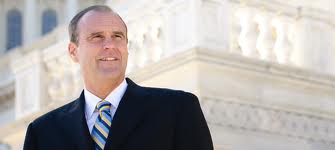
Haley Barbour is founding partner and Ed Rogers is chairman of BGR Group, a government affairs and public relations firm in Washington


Connie Tipton – Outstanding Choice

Today’s post comes from Randy Russell, Partner, The Russell Group

I can think of no one more deserving of the Bryce Harlow Foundation’s Business-Government Relations Award than Connie Tipton. If success is measured by the length of the road traveled—Connie has traveled further and accomplished more than about anyone I know.  And the road she traveled has truly been a “road less traveled.” Being a woman who rose to the top in the agriculture and food industry over the last 35 years –an industry traditionally dominated by men—is truly a tremendous accomplishment. But more importantly, Connie achieved this success the right way—full of class, integrity, humor and always helping to promote others in their careers. I can’t think of a more deserving recipient and one that exemplifies the values of the Bryce Harlow Foundation than Connie. I especially look forward to attending this years’ event.Randy Russell


Outstanding Women Advocates

The Bryce Harlow Foundation believes that sound public policy benefits when the voices at the table are strong, honest and articulate. That is why we are a proud sponsor of the Professional Women in Advocacy Conference taking place December 8-10 in Washington, DC.  The tagline for this conference says it all: “When women have a seat at the public policy table, everyone benefits.” This national conference will provide professional development and leadership training to women in all areas of advocacy including government relations and public affairs. The organizers, all prominent women lobbyists themselves, worked hard to craft an experience that will both inspire participants and prepare them for success.

The conference will highlight, at its Power Women in Advocacy reception, eight outstanding women advocates, nominated by their peers for their achievements in five categories: federal issue campaign, state issue campaign, campaign for women serving women, veteran practitioner and up-and-coming practitioner.  While men still outnumber women in the lobbying ranks, it’s important to recognize and pay tribute to notable women who have gained notice from their peers for their effective expertise and performance.  Members of the Bryce Harlow board were asked to serve on the awards selection panel and I’m pleased to share the winners in each category below.

Dorothy Coleman, Vice President of Tax and Domestic Economic Policy at the National Association of Manufacturers, will be honored in the Federal Issue Campaign category for her outstanding leadership during the fiscal cliff crisis of December 2012. “Dorothy’s advocacy efforts on behalf of the NAM helped to prevent the largest tax increase in history and to bring about positive tax changes for manufacturers,” said her colleague Laura Narvaiz when nominating her for the award.

Amber Harding and Marta Beresin of the Washington Legal Clinic for the Homeless are the recipients of the State Issue Campaign award for their tireless efforts to ensure that homeless families in Washington, DC were protected against potential new laws that could have been harmful. “Harding and Beresin mobilized a broad community of supporters and worked with the Gray Administration to soften the impact of certain provisions and with the DC Council to remove provisions that remained punitive and harmful,” stated their colleague Patricia Mullahy Fugere.

The honorees in the Women Serving Women Campaign category are Barbara S. Wahl, Kristine J. Dunne and Alison Lima Andersen, attorneys at Arent Fox, for their years of work fighting for the rights of women who have suffered gender discrimination in the awarding of farm loans by the USDA. “As a result of their excellent efforts, the government has offered an administrative claim program that makes over $1 billion available to women who can prove gender discrimination,” said Roderic Boggs of the Washington Lawyers Committee for Civil Rights and Urban Affairs.

The winner in the Up-and-Coming Practitioner category is Mary Kate Cunningham, manager for public policy at the American Society of Association Executives Center for Association Leadership. Although she has only been a registered lobbyist for one year, Mary Kate’s co-worker Robert Hay stated that “without a doubt, she has a bright future as a female leader and star lobbyist.” She will be recognized for her impressive ability to simultaneously organize her association’s annual member fly-in (with record attendance) while also coordinating grassroots efforts to fight a major Senate amendment. She also makes significant contributions to Running Start, an organization dedicated to bringing young women into politics.

The final honoree in the Veteran Practitioner category is Martie Kendrick of Patton Boggs for her impact on health care legislation over the past twenty years. Among countless other achievements, Martie’s advocacy efforts resulted in the inclusion of colorectal cancer screening benefits as one of the first Medicare preventative benefits, as well as statutory language that expanded funding to mammography for lower income women.“ Not only has Martie represented clients successfully before Congress in virtually every major piece of health, Medicare and Medicaid legislation, but she has also achieved many legislative victories on behalf of the firm’s pro bono clients such as Bright Beginnings Day Care Centers and the Greater Washington Urban League,” said Kevin O’Neill of Patton Boggs.

For more information and to register for the conference, please visit womeninadvocacy.com.

Serving Those Who Serve Us

Today’s post comes from Al Thompson, principal at Mehlman Vogel Castagnetti.

e31ace2a15a7c70645ad83df9ecd43b0_M

Too many of the American people hold this common assumption that lobbyists are merely
a special interest group whose sole purpose is to help the privileged receive favors from the government; and unfortunately, there are too few stories available to combat such judgment. The truth is that we spend a great deal of our time advocating for clients who cover wide swaths of society. For instance, over the past three years I have had the distinct privilege to represent Monster.com, along with its subsidiary Military.com. Military.com is the largest military member website in the country with over 9 million subscribers, and it remains one of the top ten largest news sites on the internet.

Military.com has put forth a significant effort to develop a system that assists military
personnel as they search for employment once they leave the service. It has also conducted extensive research on the barriers that military members often face when trying to find civilian employment. Our government, along with the private sector, has created many successful programs that have resulted in veterans getting hired; however, even despite these triumphs the veteran unemployment rate remains well above the national average. The primary barrier for a veteran seeking work is their ability to translate his or her skills in a way that civilian employers can understand. I can speak personally about this issue, for I have experienced this challenge myself; when I left the military, I had to pay someone who could translate my resume in such a way that it highlighted my qualifications for work on Capitol Hill.

It has been an absolute privilege to work with executives from Military.com and share in their pursuit to educate Members of Congress, and their staffs, on the ways that our government can harness technology to improve the employment transition programs for military personnel. These efforts have resulted in the improvement such programs, such as the Vow to Hiring Heroes Act. I can say that when President Obama signed this law into action, it was one of my proudest days as a lobbyist, because I was able to serve those who serve us.

The Lobbyists Prom

Today’s post comes from National Retail Federation president and CEO, and Bryce Harlow board member, Matthew Shay.

Matthew Shay
Matthew Shay

This week, hundreds of Washington, D.C. professionals, including Members of Congress and association presidents came together to honor a great man and D.C. legend, Bryce Harlow.

During the 32nd Annual Bryce Harlow Foundation Awards Dinner, which I had the honor and pleasure to chair, hundreds of lobbyists, government affairs representatives, corporate executives and communicators gathered to remember this great man, his legacy, and commitment to public service and professional advocacy.

At the dinner, we took time to honor the extraordinary class of 2012-2013 Bryce Harlow Fellows – 20 in all – and presented awards to two most-distinguished recipients, Mr. Charlie Black and U.S. Senator Mark Warner.

Senator Mark Warner was the proud recipient of the 2013 Bryce Harlow Award for his contributions to the business-government relationship. Serving with honor as both as the 69th governor and now senator from the Commonwealth of Virginia (my home state), Sen. Warner has fought tirelessly to incorporate free market principles into government, and has reached out to business, trade associations and even Republicans (it happens) to focus the nation’s attention on our deficit and debt.

Senator Warner is an exceptional politician and leader, and most deserving of this
distinguished award.

Charlie Black of Prime Policy Group received the 2013 Business-Government Relations Award for his active contributions to advocacy and public policy. Black has been a trusted advisor and counsel to numerous corporations, clients, presidents and candidates alike – from Barry Goldwater to Mitt Romney. His dedication, trustworthiness and loyalty to his beliefs and his clients have been at the cornerstone of his 30-year career and his laudable success in both public and private service.

Charlie is truly the embodiment of this noble distinction.

The 32nd Annual Bryce Harlow Foundation Awards Dinner is more than just another dinner; it is a time to honor those who dedicated their lives and careers to public service and a moment to welcome a new class of government relations professionals and advocates.

I would like to personally thank Foundation Chairman Juanita Duggan, Foundation President Linda Dooley, U.S. Senate Chaplain Dr. Barry C. Black and U.S. Senators John McCain and Jerry Moran for their time, service and commitment and those who sponsored the 2013 awards dinner. Thank you for keeping Bryce’s legacy alive.

Ethical Obligation vs Legal Obligation

Today’s post comes from Prof. Thomas Merrill, who will be presenting at tomorrow’s Bryce Harlow Ethics and Lobbying Workshop.

Discussions of the moral responsibilities of lobbyists often start and end with legal Dr. Thomas Merrillobligations. Yet the law may well be problematic in many different ways: it may be the product of “regulatory capture,” short-sighted reform efforts, or even outright manipulation by interest groups. To navigate professional life successfully, then, we need to cultivate some sense of ethical virtues that go beyond merely “following the letter of the law.”

In this session we will discuss the U.S. Constitution and the political theory of the Federalist Papers as one example of how to think about that broader sense of ethical virtue. The Federalist Papers are based on a steely realism about the power of self-interest to lead to tyranny and an optimism that institutions can be designed to channel interests into the service of the public good. A good constitution recognizes that interests and interest groups will always be with us but can be made to check or restrain each other: “Ambition must be made to counteract ambition.”  One way the Constitution uses ambition to check ambition is by multiplying the number and kinds of interests and allowing them to compete with each other.

On this view, lobbying plays an important and necessary role in the constitutional order. The Federalist invites us, not to deny the reality of interests, but to elevate them and see them from the perspective of the overall constitutional order and the overall public good.  It invites us to see lobbying, not as the crass pursuit of self-interest, but as a kind of statesmanship requiring virtues such as prudence, intelligence, and integrity.

The Bryce Harlow Fellowship

Today’s post comes from Bryce Harlow alumni fellow, Sarah McDonald.

When I first applied for the Bryce Harlow Fellowship, I knew that I had a passion for Sarah Sobekipublic affairs and the desire to make a difference in the advocacy world, but had not considered lobbying itself as a profession, having always worked on and enjoyed the administrative and grassroots side of advocacy.  However, through the networking opportunities I engaged in as a fellow, including “People You Should Know” luncheons, the interaction with the board of the foundation, and the peer to peer relationships with the other fellows, I began not only to learn more about lobbying, but also to realize that my strengths and education would be well-suited for a career in this other, very interconnected but different, aspect of advocacy.

I was incredibly fortunate to be offered the Bryce Harlow Fellowship for two years, and felt comfortable setting up one-on-one meetings with my mentors and candidly expressing my plan for career growth in the influence industry.  I also found that the content, organization, and scheduling of Bryce Harlow events made attendance not only possible, but a very beneficial use of the limited extra time available to working professionals who are also studying for their Masters’ degrees.

The Bryce Harlow Fellowship is invaluable to any student and professional studying and working in the advocacy field, and I am proud and grateful that I can say the fellowship has directly helped me in my career.  In January of this year, I was promoted to Manager, Government Relations to be a federal lobbyist.  While I know I earned this promotion through hard work and dedication, one of the first emails I sent after learning of the promotion was to thank Linda Dooley, president of the Bryce Harlow Foundation, for allowing me to be a fellow and giving me the ability to take on my new role with confidence.


President Obama’s Lobbyist Problem

Today’s post comes from James A. Thurber, whose latest publication Rivals for Power examines the ongoing power struggle between the president and Congress.

James Thurber

President Obama has fought the influence of lobbyists since the inception of his political career, beginning as the ethics and lobbying reform leader in the Senate in 2006-07 and continuing through his candidacy and eventual presidency. The combination of rising campaign spending and lobbying expenditures, public malevolence toward lobbying, and a general resentment toward Congress have created the perfect political environment for reform.

The president has only fueled these feelings by publicly and repeatedly calling for transparency in the lobbying industry. Chapter 7 from my most recent publication, Rivals for Power: Presidential-Congressional Relations, analyzes whether the president has been successful in his attempts to change the way both Congress and Washington work.

The president has found it difficult however to tame lobbying because of its
size, adaptability, and integral part it plays in America’s pluralist democracy.
Although the number of registered lobbyists has decreased since January 2009, it is
estimated the number of people in DC who are either lobbyists or associated with
the advocacy industry is more than 100,000. And although President Obama has
decried lobbyists for hindering or stopping his policy agenda, undermining
democracy and the public interest, he has publicly praised his stakeholders from
organizations such as the AARP, pharmaceutical industry, and the health insurance
industry in passing his health care reform legislation.

The only difference between lobbyists and these non-registered stakeholders
lies in President Obama’s rhetoric; both cite the first amendment as the cornerstone
of their industry. Throughout my publication, I use examples from President Obama’s
presidency and political career as a whole to draw my final conclusion: that he has
tried to reform lobbying and Congress as a senator, candidate and president, but he
has failed to meet the high expectations of the American public to change the role of
lobbyists and specialized interests in congressional policy making.

Demystifying Lobbying


Juanita Duggan
Today’s post comes from Juanita Duggan, chairman of the Bryce Harlow board.

When I tell  people who live outside of Washington, DC  that I am a lobbyist,  I get a mixture of reactions ranging from deep respect to choleric anger and everything in between.  Regardless of the reaction, I am always struck by how little the public understands about the role of lobbying and the lobbyist in creating public policy.

Most people think that there is something mysterious, magical, and secret about lobbying as if the lobbyist is a form of Harry Potter and the Congress a grown-up Hogwarts. The most misunderstood part of the process is the most basic and least mysterious  — the fact that lawmakers lack information and without lobbyists, lawmakers do not have the information they need to make good public policy decisions.

The public assumes, particularly in the age of the Internet, that a Member of Congress need only push a button and all the relevant information is revealed.  This is a false assumption. The only information lawmakers have is information that is provided by people who will  be affected by a public policy decision. Every public policy decision creates intended and unintended consequences, winners and losers. It is the responsibility of the people whose lives and/or livelihood will be affected to tell the Congress about those consequences, so that public policy is well-informed.

Lobbyists are professional information-gatherers and professional  information-communicators and, without the data they provide, the Congress literally could not conduct the nation’s business. Lobbyists spend most of their time providing data and information to people on Capitol Hill who lack subject-matter expertise and doing it in a way that will cut through the competing “noise” of the other thousands of lobbyists whose issues have equal merit.  It is very hard, important work and there is nothing mysterious about it!

The Right to Lobby – Is More Than a Right


Juanita Duggan
Today’s post is by recently-elected chairman of the Bryce Harlow Foundation board, Juanita Duggan

The First Amendment guarantees the right “to petition the government for redress of grievances,” a right vital to a free society. But I believe that the right to petition — the right to lobby – is more than a right – it is a fundamental responsibility and duty, in particular for the business community. Good public policy cannot exist without vigorous engagement by stakeholders, especially those from corporate America. Yet we can all agree that this right is under attack and is poorly understood by the American public. These attitudes go hand in hand with the public’s growing distrust of its political institutions. So what is to be done to protect the right to petition and to protect the business community’s right to affect public policy? The best way is to ensure that future generations of lobbyists are trained in the values of Bryce Harlow. The BHF takes on this challenge directly by providing scholarships to young professionals who are working full-time in advocacy and going to graduate school at night (as did Bryce Harlow) in order to earn the credentials to be the next generation of leaders who will carry this profession in the future. Along the way we expose them to best-in-class practitioners and teach them the importance of honesty, ethics, and integrity in the profession. BH fellows receive a mentor from our Board who transfers years of experience and practical advice to help them manage their careers. They understand that the best way to be successful in advocacy is to follow the example and values of Bryce Harlow’s storied career.

Former BHF Board member David Rehr, a Professor at the GW Graduate School of Political Management, last year published some ground-breaking research, based on 3,000 surveys, of attitudes of Congressional staffers and lobbyists. The research confirms that the two things that are most valued on Capitol Hill by staff and Members of Congress are 1) the quality and honesty of the information, and 2) the integrity of the person providing it. Honesty and integrity still have more influence than what often passes as “power” in DC. This is very good news, because these are the principles on which the BHF was founded.