The Bryce Harlow Foundation is now accepting applications for the 2026-27 Bryce Harlow Fellowship, a prestigious award including scholarship funds and mentoring. We encourage you to please help spread the word, or to apply if you are working full time, going to graduate school part time and are interested in the field of lobbying and government advocacy. The deadline for applying is Sunday, May 3, 2026. For complete information, including a link to the on-line application, please visit our website.
News and Updates
Spotlight on BHF Fellow Molly Broughton
Molly Broughton grew up in Austin, Texas, and came to Washington, D.C. with a deep interest in politics, justice, and the environment. She received her undergraduate degree from American University, and an internship in the office of Representative Lloyd Doggett and lived through the Texas Freeze — the 2021 winter storm that left millions without power. Both experiences sharpened her awareness of how crises hit vulnerable communities the hardest. “Environmental policy is one of the most intersectional issues,” Molly said. “Although it impacts everyone, it disproportionately affects those who are already marginalized.”
 Molly’s introduction to lobbying came through an internship at Holland & Knight LLP, where she quickly discovered that lobbying is about education. “It was my job to make sure staffers understand issues that might otherwise not be on their radar,” Molly said. “This important work gave me a sense of purpose.” Today, as a Legislative Assistant in the firm’s lobbying division, Molly focuses on environmental and regulatory issues. “Even straightforward, non-controversial issues like recycling – which everyone wants – needs advocates,” Molly said. Molly is also pursuing a law degree at George Washington University, expanding her knowledge to help carry issues all the way through from advocacy to policy.
For Molly, the Bryce Harlow Fellowship feels like a natural extension of her work and values. Meeting with her mentor, Heidi Brock, she is learning by example the practice of ethical lobbying. At Holland & Knight LLP, she’s surrounded by alumni of the Fellowship program, including her mid-career mentor Andy Emerson, and sees firsthand how a culture of mentorship can shape careers. “The Fellowship engenders all that is good about lobbying,” Molly said. “I hope to carry on the legacy of Mr. Bryce Harlow throughout my career.”
Spotlight on BHF Fellow Phillip McAuley
Raised on the Gulf Coast of Mississippi, Phillip McAuley’s path to public policy was shaped by Hurricane Katrina. When the storm devastated his hometown of Pass Christian in 2005, his family lost nearly everything. In addition to teaching him to let go of material things, the official government response to the disaster was eye-opening. “It showed me just how essential political will and community influence are in driving change and taking action,” Philip said. “Those lessons will stay with me forever.”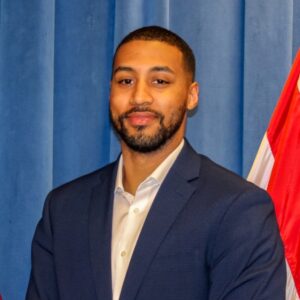
This experience sparked his interest in government and public affairs. After earning a business degree at Mississippi State University, he interned on Capitol Hill for Congressman Steven Palazzo and completed a master’s in public administration and policy at the University of Georgia. Today he is Senior Manager of Public Policy – East, North America at Vantage Data Centers and an MBA candidate at Georgetown University.
In his role at Vantage, Phil oversees advocacy, permitting, legislative and regulatory matters across the eastern U.S. The work is increasingly important as AI drives demand for digital infrastructure. “Data centers have moved from being a background utility to a focal point for policymakers,” Phillip said. “It’s exciting to play a small part in shaping this new era.”
Phil considers it an honor to be part of the Bryce Harlow Fellowship. “Professional development is very important to me, and this program offers mentorship, best practices and a network of peers across industries,” Phillip said. “I want to be a sponge, learning from the experiences of others, both their challenges and their wins.” He hopes to carry that forward, giving back by modelling ethical leadership and mentoring the next generation of professional advocates.
Spotlight on BHF Fellow Katie Gaynor
Katie Gaynor’s path toward a profession in health policy was shaped by her early experiences with rural communities and local food banks. Having lived in four states before enrolling at the University of Alabama, she credits two experiences with shaping her perspective: volunteering in rural hospitals where saw gaps in access to care, and working at a local food bank, interviewing seniors about barriers to SNAP benefits. “It was eye-opening to see people who had given so much into the system go without basic support,” Katie said.
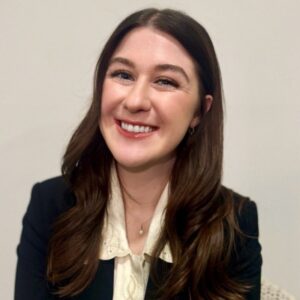 Bringing this perspective to Washington, D.C. Katie began working to shape federal policy. She started her career at a pharmacist association during the COVID-19 pandemic, and now serves as a Hospital Policy and Regulatory Analyst at the Association of American Medical Colleges (AAMC) where she focuses on hospital payment and drug pricing policy. Her work advances the mission of academic medicine and promotes equitable access to care.
Katie is also pursuing a Master’s in Public Health at Johns Hopkins, concentrating on health policy and management. “I’m continually learning how to combine the technical side of policy with advocacy to make systems more sustainable, efficient, and fair,” Katie said. She credits mentors with showing her how to link career decisions with deeper purpose and is looking forward to working with her Bryce Harlow Fellowship mentrors, Jane Adams and Ali Icenhower.
For Katie, becoming a Bryce Harlow Fellow brings these threads together. She was drawn to the Foundation’s emphasis on integrity in lobbying and collaboration across the aisle, which she sees as essential in health policy. “I am constantly thinking about the people back home in Appalachia,” Katie said. “This Fellowship helps me carry forward the idea that advocacy should always serve the people first.”
Spotlight on BHF Fellow Hannah Bolotin
Hannah Bolotin is dedicated to breaking down silos and building bridges across divides in public policy and criminal justice. A native of Washington State, she earned her undergraduate degree from Wesleyan University and began her career as a researcher at Boston College, studying how children across cultures understand punishment and justice. “Working in non-Western cultures showed me the importance of stepping outside your own frame of reference,” Hannah said. “It taught me how much you gain by widening the lens.”
Hannah carried that lesson into her criminal justice policy career. As Manager of External Relations at the Council on Criminal Justice (CCJ), Hannah engages CCJ’s diverse membership of criminal justice leaders and works to develop consensus-based policy recommendations spanning the political spectrum. “I’m constantly engaging with people from every background,” Hannah said. “The best part of my job is seeing unlikely allies work together and form lasting relationships.”
Guided by a strong moral compass, Hannah is pursuing a Master‘s in Public Affairs at Duke University, where she focuses on ethical leadership and coalition-building. It also drew her to the Bryce Harlow Foundation Fellowship. “I’m honored to be part of this community of principled advocates committed to shaping the future of policymaking and social change,” Hannah said.
Spotlight on BHF Fellow Kristen Batstone
Kristen Batstone grew up in rural Pennsylvania, where everyday life included driving an hour for groceries or struggling to find a doctor. Although it felt normal at the time, later she realized those experiences pointed to bigger structural gaps. “I saw how often rural voices were left out of the conversation,” Kristen says. “After volunteering at my local food pantry, I also saw how quickly hardship could touch any household.”
 These realizations propelled her toward a career in public service and public policy. After earning her undergraduate degree at American University, Kristen built her career around bringing rural perspectives into national discussions. During her work at Save the Children, leading its domestic nutrition policy portfolio, her advocacy efforts caught the attention of congressional staff, and this year she stepped into a new role as a Legislative Assistant on the House Agriculture Committee, covering the nutrition portfolio.
The Bryce Harlow Fellowship is natural fit for Kristen, and she’s especially excited about working with her mentor, Alison Bodor, who also specializes in food and nutrition policy. Kristen sees her own path as aligned with the spirit of Bryce Harlow himself. “I love working alongside Congress to make a difference and am looking forward to learning from experts in the profession.” Kristen said.
Introducing BHF Board Member Mike Gottlieb
We’re delighted to welcome Mike Gottlieb, Senior Partner and Managing Partner at PENTA, to the Bryce Harlow Foundation Board. At PENTA, Mike helps government affairs professionals measure and demonstrate the impact of their work — drawing on a career that has spanned public service at the White House, the Department of Health and Human Services, and the U.S. Air Force Reserve. His mix of federal experience and private-sector insight gives him a unique perspective on how advocacy is changing and what it takes to succeed.
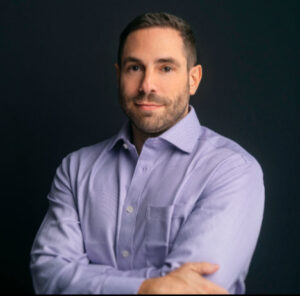 Mike was drawn to the Foundation through colleagues and clients already on the board, people he describes as some of the “smartest, kindest, most principled professionals” he knows. Their endorsement, along with the chance to contribute in a more direct and personal way, made the decision to join an easy yes.
After years of public service at the federal level, where results often unfold slowly, Mike is eager for the chance to make a direct impact on the next generation of advocates. He credits his own career success to the mentors who guided him along the way and now looks forward to paying that forward by helping fellows gain perspective, build long-term careers, and navigate an increasingly complex profession.
He also believes the Foundation can have a vital role in shaping the standards of the field itself. With government affairs evolving far beyond traditional lobbying, the need for principled, effective, values-driven advocacy has never been greater. For Mike, the combination of supporting young professionals and strengthening the standards of the profession is what makes this work so meaningful.
Spotlight on BHF Fellow Zil Joyce Dixon Romero
Zil Joyce Dixon Romero is the State Government Affairs Manager at the National Rural Health Association (NRHA) and is currently pursuing a master’s degree in policy management at Georgetown University. Born in Las Vegas and raised in Henderson, Nevada, Zil credits his path to advocacy with beginning at age three, when his grandfather taught him a simple but powerful message, “If you have the ability to help people, you should do so.”
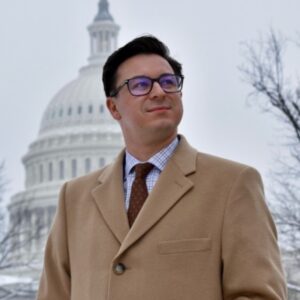 This remains his core belief today. He learned about the everyday impact of policy through internships on Capitol Hill after getting his undergraduate degree from American University. “Advocacy starts with people and communities, not partisanship,” Zil said. “Begin with the community you care about, learn what they need, and then map out a path together.”
This philosophy guides his work at NRHA, where he focuses on keeping rural hospitals open, ensuring access to care, and addressing gaps in health education and workforce. “Rural healthcare is one of those rare issues that unites both Democrats and Republicans,” Zil said. “Shining a light on it and finding pragmatic solutions is the most important thing I can do.” His graduate studies at Georgetown complement his advocacy, giving him the tools to design policy solutions while testing ideas in practice.
As a Bryce Harlow Fellow, Zil is eager to learn from leaders who model ethical, effective advocacy. He’s excited to continue a career rooted in the values his family instilled and hopes the Fellowship will help him build his network and deepen his skills.
Meet new BHF board member Nicole Collier
Nicole Collier is Vice President of North America Government Relations and Public Policy at Procter & Gamble, where she leads the company’s engagement with policymakers across the region. Raised in Syracuse, New York, in a family active in public service—and where dinner often meant watching the evening news together—she developed an early fascination with how policy shapes people’s lives.
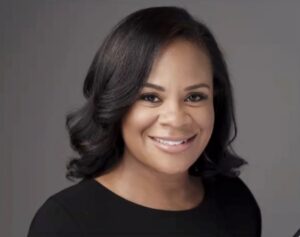 Her first introduction to the Bryce Harlow Foundation came years ago at the annual dinner. She remembers the impact of walking into a room filled with so many leaders from her professional world and being struck by the Foundation’s focus on the positive qualities of lobbying – both in individuals who practice it and in the craft itself. At a time when the profession was under scrutiny, the idea of honoring integrity, expertise, and thoughtful advocacy resonated deeply. Her new Board role with the Foundation feels especially meaningful, as P&G has deep ties to Bryce Harlow himself. Mr Harlow is widely considered the first corporate lobbyist, and Nicole takes pride in carrying forward that legacy of credibility and integrity.
For Nicole, those values remain essential, and she draws energy from conversations, even the tough ones. “In my 25 years of lobbying I’ve has seen how quickly the environment can shift,” Nicole said. “Success in this field requires agility, curiosity, and above all, strong communication — informing people with a goal of gaining their understanding and helping them see the significance and lasting impact of the issues at hand.”
She believes the best advocates balance substance with diplomacy, pairing a strong grasp of issues with an ability to connect authentically. That balance, she says, is what gives advocacy real impact.
Nicole is excited to meet and work with the Foundation’s Fellows to help them approach their careers with flexibility and openness. For Nicole, the Foundation’s enduring strength lies in shaping advocates who can navigate change while holding fast to credibility and integrity.
Spotlight on BHF Fellow Annie Perrin Grisham
Annie Perrin “AP” Grisham, is originally from northern Alabama, growing up at the edge of the Appalachian Mountains where community and place shaped her sense of service. During college at the University of Mary Washington, she worked with the Appalachia Service Project during the summertime, helping to repair homes for families living without basic necessities such as running water and electricity. During the school year she interned on Capitol Hill for a member of Congress.
Wh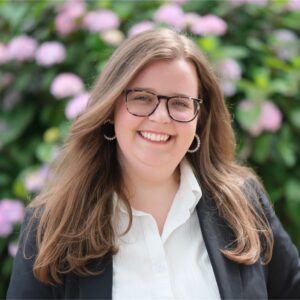 en tornadoes devastated the very district where she volunteered, AP helped the Congressional office research federal disaster funding. Seeing her work contribute directly to communities she cared about was a turning point. It inspired her to study political science and confirmed her belief that policy can drive meaningful change.
Today, she is a Policy Associate with IEEE-USA, a national association representing more than 150,000 technologists, and is pursuing a Master of Arts degree in Public Administration at George Washington University.
AP was drawn to the Bryce Harlow Foundation Fellowship because of its commitment to ethical, bipartisan advocacy. “I’ve seen first-hand how lobbying can be a force for good,” AP says. “I believe honest, bipartisan, advocacy will create positive change.” As a new Fellow, AP is most excited about the opportunity to work with her mentors, Genna Gent and Marissa Serafino. She looks forward to broadening her network, gaining outside perspective, and having trusted advisors to call upon for ideas and guidance.
Looking ahead, AP knows she wants to remain in the policy world, advocating for change where it is most needed. Whether that means continuing to shape technology policy or returning to social issues closer to her roots, she is determined to ensure her work has a lasting, positive impact.
Please Share and Follow Us